Showing posts with label YA. Show all posts
Showing posts with label YA. Show all posts
Monday, June 28, 2010
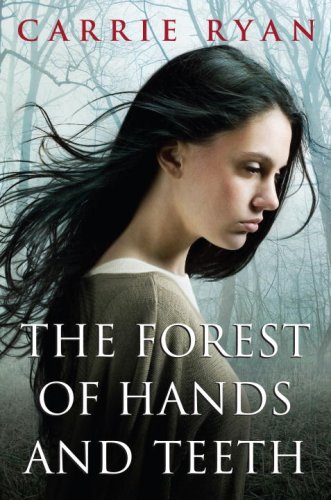
Review: The Forest of Hands and Teeth by Carrie Ryan


Tuesday, June 22, 2010

Monday, May 31, 2010
Smile by Raina Telgemeier: Another Great Graphic Novel

When twelve year old Raina loses her two front teeth – her permanent teeth – it seems like the end of the world. Through years of braces, headgear, retainers, middle school and high school Raina learns who her true friends are and how to be happy with herself.
I’ve yet to read a graphic novel I haven’t liked. And Smile by Raina Telgemeier is no exception. It has such an uplifting message for young girls and is an enjoyable read. Telgemeier is not only a great writer but a great artist. The pictures are all in color and do a nice job of capturing the emotion of each moment. There were some funny moments when I chuckled and some tender ones when I teared up. From experiencing your first crush to worrying about pimples, there’s something in this book for every girl. In a time of life when girls feel pressured to mature quickly, I appreciated how Smile portrays an innocent who’s happy to be that way. Raina realizes she doesn’t have to follow her friends into makeup and kissing if she’s not ready. As you likely noticed, the character and author’s name are the same. That’s because this is a true story which makes it even better!
Publisher: Scholastic, 2010 Pages: 218
Rating: 5 Stars Recommended Age: 10 and up Source: IC Public Library
Monday, May 24, 2010
Incarceron by Catherine Fisher

Claudia has prepared all her life to marry the prince. But as the wedding day approaches, the aloofness of her father, the Warden, and certain rumors spur Claudia to action. Questions must be answered. Finn, a cell-born without father or mother, scared and alone, is released into the world of Incarceron – a vast prison system, dark and dangerous, a great experiment gone wrong.
I totally read for plot. It usually can’t be helped but this time I became engrossed by the all the elements of plot. The exposition, setting and intro material about characters, etc, pulled me in. This is hard to accomplish. I usually can’t wait to get to the middle of a story and become worried that I’m wasting my time. There’s a lot of action and intrigue in the first few pages so I had no problem getting into it. The raising climax was nail biting. Where is the prison? How is it controlled? How is it that no one gets in or out? The climax is fairly predictable. We’re set up to know what to expect. And then, for the most part, it happens. But the resolution was great. I wasn’t sure about the prison’s location but at least one of my theories was in the ball-park. And I didn’t see the last bit coming (I don’t want to give anything away but it was a gasp moment). I am so excited I won a copy of the sequel, Sapphique (available this Dec. in the U.S.), because I am really intrigued by the futuristic society and the prison. I want to see how Claudia and Finn attempt to achieve their goals.
Let’s talk prose. Fisher uses third person narration in Incarceron and it works very well as she alternates between the two worlds. I enjoyed the “quotes” at the beginning of each chapter that were bits of Incarceron legend or the gossipy private letters between characters that are full of intrigue. This story is set in a technologically repressed future (creating a "high fantasy" feel) and a couple times I found the dialog sounds a bit too “today.” But it’s not a big deal and is probably just me being picky. However, there were some times I got lost. The descriptions can be hard to interpret. With a re-read I usually got what was going on. This is the only real drawback to this book. Nonetheless, I didn’t find they stopped me from wanting to continue. Incarceron is a fast read that reminded me of The Hunger Games. Both are fantasy set in the future, they feature a good dose of violence and action but, oddly, remain very innocent. The swearing is infrequent (mostly “bitch” and “hell”) and there are no sex scenes. I think this is a book you can give your young adult and not worry so much about content. I think the story is ok for younger readers but they may have difficulty with some of the tricky descriptions. But that doesn’t mean younger kids (or adults) wouldn’t enjoy Incarceron. I sure did!
Publisher: Dial, 2010 (originally in G.B. in 2007) Pages: 442
Rating: 4.5 Stars Recommended Age: 13 and up Source: IC Public Library
Friday, May 7, 2010
Tithe: A Modern Faerie Tale by Holly Black

A part of me enjoyed the story. Kaye, a sixteen-year-old girl, finds out she is really a changeling – a pixie that looks human – and is thrown into the middle of a courtly feud in this new world. But I wasn’t really interested in Kaye or most of the characters. The human characters smoke, drink, swear, shoplift and ditch school a little more than most normal kids. It was pretty impossible for me to identify with them. I felt sorry for Kaye (her mom is a transient rock star wannabe who has no interest in parenting) but by the tone of the text the reader isn’t meant to feel pity for her. Kaye’s best friend is very childish and jealous. The boys are very touchy feely with the girls. The only reason I did not dislike Kaye is because of the lack of guidance she has and the fact that she is young and trying to figure herself out. In stark contrast to the humans, Roiben, the “dark knight” faerie, is a complex character offering mystery and a better romantic figure. I liked Roiben and he was probably the only reason I kept reading.
It took about a hundred pages before I became interested in the story. I felt the text lingered too long on Kaye’s crappy human life and I was antsy to get to the faerie tale part which was good. Black doled out just enough of the good stuff to keep me reading. The text is a fast read. I would have quit otherwise. Some of the sentences just didn’t make sense. I was re-reading many, trying to get the meaning out of them without success. The “f” word set in right away but tapered off to my relief because the dialogue was just too high school for me, if that makes sense. As the story focused more on the faerie tale part, my reading experience improved. I feel Black’s writing style in Tithe is very conflicted. It seemed as though she wanted to write as Kaye in first person. I think that would have worked so much better. The third person POV was cramping Black’s style.
If you like faeires, kelpies, and pixies crossing from weird other worlds to ours, you may enjoy Tithe. If you like urban-fantasy, I suspect this text is for you. Although marked as YA, parents should be aware of the issues, most of which I mentioned earlier. Without parental guidance, I do not recommend letting very young teens read this. Like I said, I did like the story. I’ll be reading Ironside in the future with hopes that Black will have worked out the kinks.
Publisher: Simon Pulse, 2004 (originally published 2002) Pages: 331
Rating: 2.5 Stars Recommended Age: 16 and up Source: IC Public Library
Tuesday, April 27, 2010
Esperanza Rising by Pam Munoz Ryan

I enjoyed Esperanza’s story, based off Ryan’s grandmother’s life. The writing is interspersed with Spanish making this a very cultural text. I think this is an excellent book for kids to learn about the difficulties of emigrating families, the richness of Mexican culture as well as the history surrounding the Great Depression. I find this story particularly relevant today as we come out of our economic slump. With so many unemployed, sympathy for non-citizen workers definitely fades. Esperanza’s story reminds us that everyone deserves humane treatment and that stereotyping has never helped our country in the past. That’s what I got out of this text, anyways! I will tuck away this title in my memory bank for my future kid someday.
Publisher: Scholastic, 2000 Pages: 262 Source: IC Public Library
Rating: 4 Stars Recommended Age: 10 and up
Saturday, April 24, 2010
The Hunger Games by Suzanne Collins
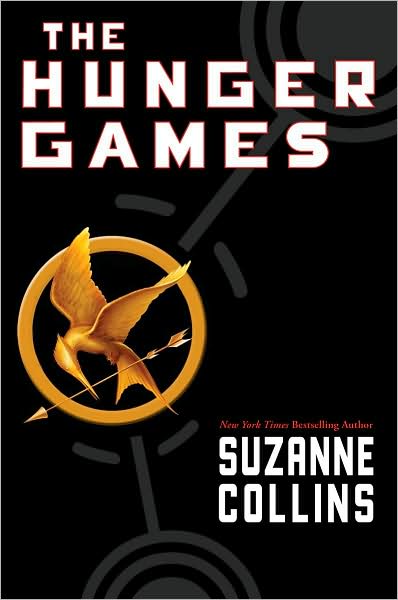

At first, the prose was not drawing me in. On page one the first-person present-tense narration turned me off and I thought “Oh, no. Not present tense and first person.” Not my favorite POV. However, the prose gradually improved until I really enjoyed Katniss’ narration. I felt inside her head, hearing a twig snap when she did, feeling panic when she did. I even teared up a couple times. By the middle of the book I was hooked and had to know how the games would end. It seems all great sagas tend to draw out the begining a bit. I’m looking forward to reading the sequel, Catching Fire. Besides the semi-slow draw, this was a great book. If you haven’t read it yet, hop on the wagon.
Publisher: Scholastic, 2008 Recommended Age: 12 and up
Rating: 4.5 Stars Pages: 374 Source: IC Public Library
P.S. The Coliseum picture is one I took when I was in Rome last summer. It was strange to stand in a place where people died. Can you imagine watching such a "game"?
Sunday, April 18, 2010
Shiver by Maggie Stiefvater

If you’ve been thinking about reading this I’d say go ahead. Don’t let me stop you because there are some positive aspects to this book. Stiefvater is a great writer. There are some beautiful passages with creative metaphors. I liked how the chapters switched between Sam and Grace’s point of view. The dialog isn’t cheesy although I felt it sounded pretty grown up for teenagers. The story-line is fairly original for the age-old werewolf story. The main thrust of the novel is its romantic relationship and this is where it fell flat for me. The relationship between Sam and Grace didn’t engage me. The romance felt rushed without a gradual build-up. They were just instantly in love and glued together. I guess I like more suspense. And the whole hiding-my-boyfriend-in-my-bedroom was sort of lame to me. Also, there wasn’t enough mystery. At once we know what Sam is (so no suspense there) and the danger lurking within the pack didn’t draw me in either. If you’re a fan of paranormal romance I suspect you will like Shiver. Maybe I’ll pick this back up in the future but for now, I’m moving on.
Publisher: Scholastic, 2009 Pages: 392 Source: IC Public Library
Rating: none since I didn’t finish it
Wednesday, April 14, 2010
When You Reach Me by Rebecca Stead

Twelve-year-old Miranda encounters shifting friendships, a sudden punch, a strange homeless man and mysterious notes that hint at knowledge of the future. These and other seemingly random events converge in a brilliantly constructed plot. – from: http://www.ala.org/ala/mgrps/divs/alsc/awardsgrants/bookmedia/%20newberymedal/newberymedal.cfm
So, what was so great about his book? The voice, Miranda’s voice, was incredibly authentic. She was cute, spunky and genuinely concerned about those around her. Yet she was sometimes selfish and gave her mom a bit of lip. She isn’t perfect but she sure is loveable. Stead captures the concerns of a 12-year-old perfectly. Miranda often asks: Why does my best friend avoid me? Why do the girls at school give me dirty looks? She becomes aware of her family’s lack of money. Her first crush develops. And in addition to these normal bumps to growing up, Miranda receives mysterious and rather alarming notes. These notes drive the plot as Miranda tries to puzzle them together. I enjoyed how the book is written as Miranda’s reply to the messenger and how the text begins addressing someone we don’t know. This is a touching story of growing up, learning how to be a good friend and opening oneself up to possibilities. I don’t want to give too much away as there is quite a bit of mystery. The plot kept me guessing and I wasn’t sure of the messenger’s identity until he/she is revealed.
This text references A Wrinkle in Time by Madeleine L’Engle (my review) throughout the book so, if you haven’t read Wrinkle you may want to do so first or at least read a synopsis of it before reading Stead’s book. Miranda finds comfort and role models in her favorite book and is alarmed when others try to pick it apart. She says, “The truth is that I hate to think about other people reading my book. It’s like watching someone go through the box of private stuff that I keep under my bed” (Stead 49). That’s often how I feel when a book is discussed in class and characters that I adore are scrutinized. It’s funny how adults will become defensive and argue their favorite character’s integrity! I can see this being a teacher’s great challenge when discussing books with kids and trying to get them to see a different perspective. Have you ever felt so strongly about a fictional character? When You Reach Me was a perfect story and a must read. I’m sure it will be a well-loved book for years to come.
Publisher: Wendy Lamb Books of Random House, 2009
Rating: 5 Stars Source: IC Public Library Pages: 200 Recommended Age: 10 +
Tuesday, April 13, 2010
A Wrinkle in Time by Madeleine L'Engle

Publisher: Laurel-Leaf of Dell, 1962 Recommended Age: 10 and up
Rating: 3 Stars Pages: 190
Sunday, April 11, 2010
Graceling by Kristen Cashore

Cashore’s writing style was easy, fluid and fun to read. I would call this “light” reading but it wasn’t exactly childish either. It’s a nice medium between adult and children’s prose. The story is pretty captivating, starting in medias res, with a lot of action, secret councils and life-saving missions. I liked Katsa, the sixteen-year-old girl who struggles with the nature of her grace (aka ability) to kill. The violence she commits weighs her down and she wrestles with controlling her grace and not letting her grace control her. She’s a strong individual with an independent spirit which leads her to be rather stubborn at times. I liked that she wasn’t perfect and that she makes some mistakes. This book made me think about how I use my abilities. Some people are smart, good at making friends, financially successful, etc. but do we use our abilities to serve ourselves or those around us? In her youth, Katsa is manipulated but as she matures she learns that only she decides what her grace will be used for. There are some twists, dark secrets and, of course, a quest to set things right!
Causes for concern: These are reasons why my age rec. is so high. There are some mentions about menstruation. Katsa and her boyfriend have sex on several occasions (there isn’t much detail but there is an oh-so-convenient birth-control herb). Katsa is adamant that she will not marry and is willing for her bf to be unhappy so that she can be fulfilled. There is a lot of violence and descriptions of Katsa killing people. Just some things for parents to know and to talk about with young readers.
I enjoyed the story overall and am interested in reading the sequel, Fire. Check out the author’s blog: http://kristincashore.blogspot.com/
Publisher: Graphia, Houghton Mifflin, 2008 Recommended Age: 16 and up
Rating: 3 Stars Source: IC Public Library Pages: 471
Wednesday, March 31, 2010
The Book Thief by Markus Zusak
At my library, The Book Thief is constantly checked out. Now I know why. This text is worth a reread someday. If you think you’ve read every version of WWII there is to be told, I ask: have you seen it from Death’s perspective? Have you seen from a German’s point of view? Zusak takes on the challenge to present Nazi Germany from within and to show the challenges for those opposed to the Fuhrer. The story is narrated by Death, who tells us about Liesel, a young German girl with a passion for books, her family and friends. As the story unfolds, Liesel understands the power of words and how the Third Reich uses them to break apart her family and everything she loves.
Zusak’s writing style is enjoyable. He gives Death a unique voice and personality. Death is constantly breaking the narrative with short facts and asides about characters, events or his personal observations. These interruptions are a fun part of the narrative and keep the story interesting. I enjoyed how many chapters begin with a teaser, a fact or future event yet to unfold, that Death uses to get us interested in how the story will play out. Here’s an example of what I’m talking about:
Of course, I’m being rude. I’m spoiling the ending, not only of the entire book, but of this particular piece of it. I have given you two events in advance, because I don’t have much interest in building mystery. It’s the machinations that wheel us there that aggravate, perplex, interest, and astound me. (Zusak 243)
What an interesting commentary on story-telling – from Death. Normally, I do not like narrators that directly address the reader. It is often tacky and takes me out of the story. But Zusak caries it off beautifully because, I think, Death has such a real presence in the plot and his voice is so real. And moments as the one quoted remind us that this story is already over and he is telling us this in retrospect, which allows him some authority to talk to us about it. Zusak uses nonstandard English, meaning incomplete sentences and “sporadic” punctuation. I don’t count myself among the “grammar police” (notice my many “mistakes”) but I think it is hard to pull nonstandard English off and make the book strong and the reading experience fluid (thinking of Cormac McCarthy who is brilliant at doing this). Zusak does a fine job but some incompletes did throw me off a couple times. Overall though, it worked, especially as Death’s voice. No one talks in complete sentences all the time and it made him seem real. I also enjoyed the spatial aspect of the text – how some lines stand alone and other pieces are centered. It made for an interesting reading experience.
This book is dehydrating. Literally. I cried practically nonstop through the last fifty pages. Prior to that, I didn’t cry at all. It just all happened so fast, the ending that is. I couldn’t put the book down. This is a thick novel, with plenty of time to develop the characters, yet it never became stagnate. The Book Thief is definitely one worth reading.
Publisher: Knopf, 2006 Recommended Age: 14 and up (the reading and content is pretty heavy for younger readers)
Rating: 5 Stars Pages: 552 Source: IC Public Library
Zusak’s writing style is enjoyable. He gives Death a unique voice and personality. Death is constantly breaking the narrative with short facts and asides about characters, events or his personal observations. These interruptions are a fun part of the narrative and keep the story interesting. I enjoyed how many chapters begin with a teaser, a fact or future event yet to unfold, that Death uses to get us interested in how the story will play out. Here’s an example of what I’m talking about:
Of course, I’m being rude. I’m spoiling the ending, not only of the entire book, but of this particular piece of it. I have given you two events in advance, because I don’t have much interest in building mystery. It’s the machinations that wheel us there that aggravate, perplex, interest, and astound me. (Zusak 243)
What an interesting commentary on story-telling – from Death. Normally, I do not like narrators that directly address the reader. It is often tacky and takes me out of the story. But Zusak caries it off beautifully because, I think, Death has such a real presence in the plot and his voice is so real. And moments as the one quoted remind us that this story is already over and he is telling us this in retrospect, which allows him some authority to talk to us about it. Zusak uses nonstandard English, meaning incomplete sentences and “sporadic” punctuation. I don’t count myself among the “grammar police” (notice my many “mistakes”) but I think it is hard to pull nonstandard English off and make the book strong and the reading experience fluid (thinking of Cormac McCarthy who is brilliant at doing this). Zusak does a fine job but some incompletes did throw me off a couple times. Overall though, it worked, especially as Death’s voice. No one talks in complete sentences all the time and it made him seem real. I also enjoyed the spatial aspect of the text – how some lines stand alone and other pieces are centered. It made for an interesting reading experience.
This book is dehydrating. Literally. I cried practically nonstop through the last fifty pages. Prior to that, I didn’t cry at all. It just all happened so fast, the ending that is. I couldn’t put the book down. This is a thick novel, with plenty of time to develop the characters, yet it never became stagnate. The Book Thief is definitely one worth reading.
Publisher: Knopf, 2006 Recommended Age: 14 and up (the reading and content is pretty heavy for younger readers)
Rating: 5 Stars Pages: 552 Source: IC Public Library
Friday, March 5, 2010
Persepolis II: The Story of a Return by Marjane Satrapi
In Persepolis II, Marjane’s parents send her to Vienna where she lives by herself and grows up quickly. It is an extremely difficult time for Marjane. After four years, she returns to Iran at age 18 with emotional baggage and conflicted feelings. In this poignant sequel, Marjane is a woman of two worlds, feeling western and Iranian but not fully accepted by either culture.
Persepolis II highlights the subjugation and chauvinism exuded by the state that makes it hard for free thinkers to live in Iran. Although the war with Iraq is over, fear is ever prevalent as Marjane and her friends dodge the “guardians of the Islamic revolution.” Marjane struggles to find companions with similar ideologies and often feels alone. This text shows how precious our freedom of speech is as we watch Marjane become paranoid about how she speaks, dresses and draws advertisements for work.
Book two is much more serious as Marjane deals with the burdens of adulthood. She turns to radical friends, smoking, drinking and relationships in an attempt to find a place and purpose for herself. It is her strong will that keeps her going, but even her will wavers when she experiences a severe depression leading to an attempted suicide. As she realizes the extent of the state’s control over her life, Marjane’s perception of and hope in her country changes. I found Marjane’s story to be captivating. She has lead a challenging life to say the least. Her memoir allows readers a peek into a very conservative and foreign culture and how many people there continue to hope for change and peace.
Publisher: Pantheon, 2004 Recommended Age: 15 and up
Source: IC Public Library Pages: 187
Rating: 4 Stars
Persepolis II highlights the subjugation and chauvinism exuded by the state that makes it hard for free thinkers to live in Iran. Although the war with Iraq is over, fear is ever prevalent as Marjane and her friends dodge the “guardians of the Islamic revolution.” Marjane struggles to find companions with similar ideologies and often feels alone. This text shows how precious our freedom of speech is as we watch Marjane become paranoid about how she speaks, dresses and draws advertisements for work.
Book two is much more serious as Marjane deals with the burdens of adulthood. She turns to radical friends, smoking, drinking and relationships in an attempt to find a place and purpose for herself. It is her strong will that keeps her going, but even her will wavers when she experiences a severe depression leading to an attempted suicide. As she realizes the extent of the state’s control over her life, Marjane’s perception of and hope in her country changes. I found Marjane’s story to be captivating. She has lead a challenging life to say the least. Her memoir allows readers a peek into a very conservative and foreign culture and how many people there continue to hope for change and peace.
Publisher: Pantheon, 2004 Recommended Age: 15 and up
Source: IC Public Library Pages: 187
Rating: 4 Stars
Thursday, March 4, 2010
Persepolis: The Story of a Childhood by Marjane Satrapi
Marjane Satrapi chronicles her life when growing up during the Islamic revolution. When the Shah is overthrown Marjane and her family are overjoyed but soon realize that their hopes for liberty are being thwarted by a new and powerful regime. While she and her family hold onto their freedom (with clandestine card parties and music bought from the black market) the war with Iraq breaks out, increasing tensions among Iranians as they fight over religion and food supplies. From the innocent and often naïve perspective of childhood, Satrapi presents a dissident voice during a troubling time.
Can one be patriotic and dissident at the same time? The Satrapi family loves their country so much they do not want to leave despite the increasing violence and subjugation. They love their culture, friends and family and feel their life in Iran is better than what it could be anywhere else, including the United States. They want to make their home a better place by staying rather than leaving. It is the people that define a nation and Marjane’s parents want to be a part of that definition. Despite the context she grows up in, Marjane is a typical teenager who wants to go to parties and listen to popular music. Marjane is resilient after all she sees and experiences during protests and war. Seeing Marjane as a typical kid should make it easier for U.S. kids to identify with her and put themselves in her shoes and to ask how they would have felt if they were Marjane’s maid, neighbor or if they were Marjane herself.
I read this book in one sitting and enjoyed it a lot. The text offered an inside perspective of a third-world country that I would likely have never seen otherwise. It shows us what it was/is like for women who are forced to wear the veil. Marjane’s spunky attitude kept me hooked. It was amazing that she never asked the reader for sympathy or pity but to simply listen to her story. She just wants her side of the story, the unheard part of the truth, to be told.
Publisher: Pantheon Books, 2004 Source: IC Public Library Pages: 160
Rating: 5 Stars Recommended Age: 13 and up
Can one be patriotic and dissident at the same time? The Satrapi family loves their country so much they do not want to leave despite the increasing violence and subjugation. They love their culture, friends and family and feel their life in Iran is better than what it could be anywhere else, including the United States. They want to make their home a better place by staying rather than leaving. It is the people that define a nation and Marjane’s parents want to be a part of that definition. Despite the context she grows up in, Marjane is a typical teenager who wants to go to parties and listen to popular music. Marjane is resilient after all she sees and experiences during protests and war. Seeing Marjane as a typical kid should make it easier for U.S. kids to identify with her and put themselves in her shoes and to ask how they would have felt if they were Marjane’s maid, neighbor or if they were Marjane herself.
I read this book in one sitting and enjoyed it a lot. The text offered an inside perspective of a third-world country that I would likely have never seen otherwise. It shows us what it was/is like for women who are forced to wear the veil. Marjane’s spunky attitude kept me hooked. It was amazing that she never asked the reader for sympathy or pity but to simply listen to her story. She just wants her side of the story, the unheard part of the truth, to be told.
Publisher: Pantheon Books, 2004 Source: IC Public Library Pages: 160
Rating: 5 Stars Recommended Age: 13 and up
Wednesday, March 3, 2010
Evermore by Alyson Noel
Let me begin by saying I will not be reading the sequel. Even though I didn’t have high hopes when I began reading, Evermore was a big disappointment. The similarities to Twilight are appalling not just because Noel uses similar ideas (that’s okay in my book. There’s nothing new under the sun, right?) but because she took Stephanie Meyer’s originality and twisted it, making some stupid scenes in the process. For instance, Edward and Bella share Wuthering Heights as do Noel’s romantic couple but they don’t discuss it, it’s just there to make them interact. The story is written in first person from the unassuming and vulnerable girl’s perspective. It was just one knock-off after another. And it bugged me. The romance between Ever and Damen felt completely superficial partly because Ever knows virtually nothing about Damen but that he’s good looking. Supposedly they are destined for each other but I didn’t get that vibe at all. There was nothing intellectually and little emotionally shared between them, just physical attraction. It was, oh my gosh he’s totally hot and I can’t stop thinking about him for 300 pages. Damen is a terrible influence on Ever, getting her to ditch classes on multiple occasions so she will “live the good life” gambling at a race track (illegally since they’re both under aged). The text seems to assume via the characters that everyone will inevitably lose their virginity during high school (even though Ever does wait for now). And when Ever and Damen take a hiatus she decides getting into her Aunt’s vodka stash is a good way to deal, gets suspended for drinking, then continues to get wasted the entire week away from school. Ever sucks. And somehow she’s the protagonist we’re supposed to like.
Paranormal stories can take a myriad of forms, Evermore taking on the psychic mind-reading, ghost seeing realm. I couldn’t really get into the plot. I felt Noel didn’t create a very believable world for the immortals she creates. There were too many questions that were inadequately answered like, why are the immortal beautiful. The concepts were alright but their execution lacking. As to the prose, it was just so-so. Half way through the book swearing, mostly the “f” word, set in and it felt odd since in the first half none of the characters were into using such foul language. In my opinion, there are way too many good books to read to waste your time on this one.
Publisher: St. Martin’s, 2009 Source: IC Public Library
Rating: 1 star Pages: 306
Paranormal stories can take a myriad of forms, Evermore taking on the psychic mind-reading, ghost seeing realm. I couldn’t really get into the plot. I felt Noel didn’t create a very believable world for the immortals she creates. There were too many questions that were inadequately answered like, why are the immortal beautiful. The concepts were alright but their execution lacking. As to the prose, it was just so-so. Half way through the book swearing, mostly the “f” word, set in and it felt odd since in the first half none of the characters were into using such foul language. In my opinion, there are way too many good books to read to waste your time on this one.
Publisher: St. Martin’s, 2009 Source: IC Public Library
Rating: 1 star Pages: 306
Friday, February 26, 2010
Maus: A Survivor's Tale: And Here My Troubles Began by Art Spiegelman
Another great graphic novel! Maus II picks up where book one left off. Art, the graphic novelist, is still recording conversations with his father. Vladek Spiegelman begins his story again, entering the gates of Auschwitz to endure unimaginable terrors. The novel opens with Art’s misgivings about drawing Vladek’s experience during WWII and about the man he became after the war. Art admits feeling presumptuous and feels the weight of his project. Perhaps more than the first novel, Maus II highlights Art’s conflicted feelings for Vladek. He feels deep respect for his father but struggles to love the miserly and racist man his father is. Moments of such honesty keep readers from idolizing Vladek but to respect his story, to learn what we can from it and to understand each person has his or her own history. And from our personal histories we construct our world view. I think that is one lesson (even though the novelist says he intended no “message”) I get out of reading Maus. Art finds it difficult to be around his father and I think he wants to know Vladek’s story so badly because he desires to understand Vladek’s history, to know the whole person who is his father. Vladek and his wife survive the war but are forever altered.
Maus I/II is a wonderful text to introduce young people to WWII/ the holocaust. It is honest about war cruelties but is not gory. There is some swearing and a few naked mice but nothing graphic or sexual. My recommended age is 13 only because I feel kids much younger may not appreciate the relationship between Art, a grown man, and his elderly father. But don’t let the YA tag fool you. Adults can appreciate Maus as much as young people. It's not strictly a children's story by any stretch. Highly recommended!
Publisher: Pantheon Books, 1991 Recommended Age: 13 and up
Source: IC Public Library Pages: 136
Rating: 5 Stars
Maus I/II is a wonderful text to introduce young people to WWII/ the holocaust. It is honest about war cruelties but is not gory. There is some swearing and a few naked mice but nothing graphic or sexual. My recommended age is 13 only because I feel kids much younger may not appreciate the relationship between Art, a grown man, and his elderly father. But don’t let the YA tag fool you. Adults can appreciate Maus as much as young people. It's not strictly a children's story by any stretch. Highly recommended!
Publisher: Pantheon Books, 1991 Recommended Age: 13 and up
Source: IC Public Library Pages: 136
Rating: 5 Stars
Friday, February 19, 2010
Maus: A Survivor's Tale: My Father Bleed's History by Art Spiegelman
Maus (pronounced mouse) is a graphic novel that is easily in my top twenty if not my top ten favorite books. This is not simply a comic book about super heroes. Maus is a true story of love and survival during the Holocaust. The narrative shifts between the present and past while the graphic novelist interviews his father about living in Poland during World War Two. It is a riches to rags story as Spiegelman, Sr. loses all his worldly possessions while dodging the Gestapo for as long as possible. Wars may end but their devastating effects are felt for several generations. The narrative structure allows the reader to see how an entire family, born and unborn, are affected by the persistence of and memory of war. World War Two shaped many lives directly and indirectly as seen in the relationships in the Spiegelman family, especially between father and son.
The graphic part of this novel is genius. Spiegelman chose to portray Jews as mice, Germans (presumably all Nazis) as cats and the Polish as pigs. Apparently, the popular German nickname of Poles was pigs, hence their depiction as such in the novel. The mice motif, depicting Jew as victims hiding in holes in the walls, is challenged by the narrative as we see them, not just as victims but as individuals actively fighting for survival. The way people looked was hugely important, race even more so. Imagine people trying desperately to not “look Jewish” and in the novel trying not to look like a mouse. The symbolism of the animals enhances the feeling of isolation as well as camaraderie in the novel. The art allows for body language to become a visible part of the reading experience which allows emotions to come through in a way that words often fail to capture.
Maus was a big surprise. I didn’t expect this kind of experience from a graphic novel. This is my favorite WWII text for sure followed by The Hiding Place and then Last Man Out. Oddly they are all nonfiction which is something I usually don’t get into. But it makes sense that true stories are the most touching and inspiring. I could go on but if you read it for yourself you’ll understand why I like it.
Publisher: Random House, 1986 (originally, 1973) Recommended Age: 13 and up
Source: IC Public Library Pages: 159
Rating: 5 Stars
The graphic part of this novel is genius. Spiegelman chose to portray Jews as mice, Germans (presumably all Nazis) as cats and the Polish as pigs. Apparently, the popular German nickname of Poles was pigs, hence their depiction as such in the novel. The mice motif, depicting Jew as victims hiding in holes in the walls, is challenged by the narrative as we see them, not just as victims but as individuals actively fighting for survival. The way people looked was hugely important, race even more so. Imagine people trying desperately to not “look Jewish” and in the novel trying not to look like a mouse. The symbolism of the animals enhances the feeling of isolation as well as camaraderie in the novel. The art allows for body language to become a visible part of the reading experience which allows emotions to come through in a way that words often fail to capture.
Maus was a big surprise. I didn’t expect this kind of experience from a graphic novel. This is my favorite WWII text for sure followed by The Hiding Place and then Last Man Out. Oddly they are all nonfiction which is something I usually don’t get into. But it makes sense that true stories are the most touching and inspiring. I could go on but if you read it for yourself you’ll understand why I like it.
Publisher: Random House, 1986 (originally, 1973) Recommended Age: 13 and up
Source: IC Public Library Pages: 159
Rating: 5 Stars
Monday, February 8, 2010
Hatchet by Gary Paulsen
Stranded in the Canadian wilderness, thirteen-year-old Brian overcomes physical and psychological challenges in order to survive. Hatchet is fast-paced with short chapters making it a good choice for reluctant readers. The prose is simple and often repeats itself – the end of phrases being echoed in Brian’s mind. The repetition was frustrating for me and got in the way of enjoying the story. But this is likely a matter of personal preference. The fact that, not only does Brian survive, but he does very well by himself, with only shoe strings and a hatchet is rather unbelievable. That’s an adult talking. Every thirteen-year-old knows he or she is perfectly capable of doing just what Brian does. And that’s the magic of reading – a suspension of beliefs or seeing your “true” self reflected in the character. In the end, I enjoyed Hatchet and recommend it for late elementary/ early middle school students.
Publisher: Simon and Schuster, 1987 Recommended Age: 10 +
Source: IC Public Library Pages: 195
Rating: 3 Stars
Publisher: Simon and Schuster, 1987 Recommended Age: 10 +
Source: IC Public Library Pages: 195
Rating: 3 Stars
Friday, February 5, 2010
The Giver by Lois Lowry
Jonas lives in a perfect, utopian society. But when he turns twelve, an adult, with special privileges, he begins to question how much perfection is worth sacrificing for. If hunger, disease and even unhappiness were eradicated would you risk bringing them back for certain liberties? Would you risk your life?
“He glanced quickly at the wall speaker, terrified that the Committee might be listening as they could at any time. But, as always during their sessions together, the switch had been turned to OFF” (105).
This unique, young adult novel is in many ways reminiscent of Orwell’s 1984. But instead of being merely a pawn in a larger scheme, Jonas is in a position to risk everything to make a change. The relationship between Jonas and his tutor is endearing and brings a beautiful side of humanity to the forefront. My age recommendation is eleven; however, be warned that there is a mild reference to sexuality in adolescents as well as one short disturbing scene in which Jonas witnesses the euthanizing of an unwanted baby. So, this is somewhat serious for youngsters. Overall, I enjoyed the utopian/dystopian plot seen through a young protagonist's eyes. I can see why this won the Newberry Medal in ’94. The only other kids/YA book The Giver reminds me of is The City of Ember which I enjoyed but I found The Giver to surpass Ember in prose and gravity.
Publisher: Houghton Mifflin Company, 1993 Recommended Age: 11 and up
Source: IC Public Library Pages: 180
Rating: 4 stars
“He glanced quickly at the wall speaker, terrified that the Committee might be listening as they could at any time. But, as always during their sessions together, the switch had been turned to OFF” (105).
This unique, young adult novel is in many ways reminiscent of Orwell’s 1984. But instead of being merely a pawn in a larger scheme, Jonas is in a position to risk everything to make a change. The relationship between Jonas and his tutor is endearing and brings a beautiful side of humanity to the forefront. My age recommendation is eleven; however, be warned that there is a mild reference to sexuality in adolescents as well as one short disturbing scene in which Jonas witnesses the euthanizing of an unwanted baby. So, this is somewhat serious for youngsters. Overall, I enjoyed the utopian/dystopian plot seen through a young protagonist's eyes. I can see why this won the Newberry Medal in ’94. The only other kids/YA book The Giver reminds me of is The City of Ember which I enjoyed but I found The Giver to surpass Ember in prose and gravity.
Publisher: Houghton Mifflin Company, 1993 Recommended Age: 11 and up
Source: IC Public Library Pages: 180
Rating: 4 stars
Tuesday, January 26, 2010
Uglies by Scott Westerfeld
What I liked about Uglies, book one of a trilogy, is that it features a girl as the protagonist which is hard to come by in survival, adventure, and sci-fi genres. The appeal is all for young teens. What group of people frets more about their looks than young adults? The story was a little silly for me at times although I did enjoy this quick read overall. It was a unique plot that explored ways the trend toward equality might be taken to the extreme and at the cost of our humanity. In other words, it encourges young people to appreciate differences in each other instead of all trying to be the same. If I was ten years younger I would have greatly enjoyed it. As an adult, it was a little fluffy. Most disatisfying was the lack of conclusion at the end of the 425 page book. I like a good teaser ending but Uglies didn't offer any wrap-up to book one. Westerfeld wrote a female character very well. Tally is believable and easy to identify with. Despite the length this is a quick read. If you have time and want to read something strickly for fun Uglies may be your choice.
Rating: 2.5 stars
Rating: 2.5 stars
Subscribe to:
Posts (Atom)