Showing posts with label survival. Show all posts
Showing posts with label survival. Show all posts
Monday, June 28, 2010
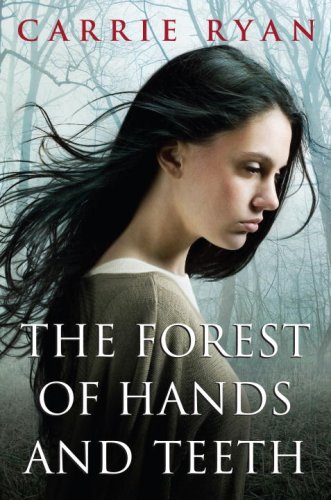
Review: The Forest of Hands and Teeth by Carrie Ryan


Saturday, April 24, 2010
The Hunger Games by Suzanne Collins
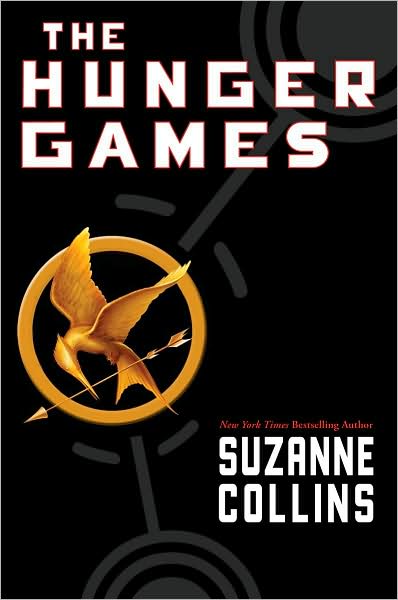

At first, the prose was not drawing me in. On page one the first-person present-tense narration turned me off and I thought “Oh, no. Not present tense and first person.” Not my favorite POV. However, the prose gradually improved until I really enjoyed Katniss’ narration. I felt inside her head, hearing a twig snap when she did, feeling panic when she did. I even teared up a couple times. By the middle of the book I was hooked and had to know how the games would end. It seems all great sagas tend to draw out the begining a bit. I’m looking forward to reading the sequel, Catching Fire. Besides the semi-slow draw, this was a great book. If you haven’t read it yet, hop on the wagon.
Publisher: Scholastic, 2008 Recommended Age: 12 and up
Rating: 4.5 Stars Pages: 374 Source: IC Public Library
P.S. The Coliseum picture is one I took when I was in Rome last summer. It was strange to stand in a place where people died. Can you imagine watching such a "game"?
Wednesday, March 31, 2010
The Book Thief by Markus Zusak
At my library, The Book Thief is constantly checked out. Now I know why. This text is worth a reread someday. If you think you’ve read every version of WWII there is to be told, I ask: have you seen it from Death’s perspective? Have you seen from a German’s point of view? Zusak takes on the challenge to present Nazi Germany from within and to show the challenges for those opposed to the Fuhrer. The story is narrated by Death, who tells us about Liesel, a young German girl with a passion for books, her family and friends. As the story unfolds, Liesel understands the power of words and how the Third Reich uses them to break apart her family and everything she loves.
Zusak’s writing style is enjoyable. He gives Death a unique voice and personality. Death is constantly breaking the narrative with short facts and asides about characters, events or his personal observations. These interruptions are a fun part of the narrative and keep the story interesting. I enjoyed how many chapters begin with a teaser, a fact or future event yet to unfold, that Death uses to get us interested in how the story will play out. Here’s an example of what I’m talking about:
Of course, I’m being rude. I’m spoiling the ending, not only of the entire book, but of this particular piece of it. I have given you two events in advance, because I don’t have much interest in building mystery. It’s the machinations that wheel us there that aggravate, perplex, interest, and astound me. (Zusak 243)
What an interesting commentary on story-telling – from Death. Normally, I do not like narrators that directly address the reader. It is often tacky and takes me out of the story. But Zusak caries it off beautifully because, I think, Death has such a real presence in the plot and his voice is so real. And moments as the one quoted remind us that this story is already over and he is telling us this in retrospect, which allows him some authority to talk to us about it. Zusak uses nonstandard English, meaning incomplete sentences and “sporadic” punctuation. I don’t count myself among the “grammar police” (notice my many “mistakes”) but I think it is hard to pull nonstandard English off and make the book strong and the reading experience fluid (thinking of Cormac McCarthy who is brilliant at doing this). Zusak does a fine job but some incompletes did throw me off a couple times. Overall though, it worked, especially as Death’s voice. No one talks in complete sentences all the time and it made him seem real. I also enjoyed the spatial aspect of the text – how some lines stand alone and other pieces are centered. It made for an interesting reading experience.
This book is dehydrating. Literally. I cried practically nonstop through the last fifty pages. Prior to that, I didn’t cry at all. It just all happened so fast, the ending that is. I couldn’t put the book down. This is a thick novel, with plenty of time to develop the characters, yet it never became stagnate. The Book Thief is definitely one worth reading.
Publisher: Knopf, 2006 Recommended Age: 14 and up (the reading and content is pretty heavy for younger readers)
Rating: 5 Stars Pages: 552 Source: IC Public Library
Zusak’s writing style is enjoyable. He gives Death a unique voice and personality. Death is constantly breaking the narrative with short facts and asides about characters, events or his personal observations. These interruptions are a fun part of the narrative and keep the story interesting. I enjoyed how many chapters begin with a teaser, a fact or future event yet to unfold, that Death uses to get us interested in how the story will play out. Here’s an example of what I’m talking about:
Of course, I’m being rude. I’m spoiling the ending, not only of the entire book, but of this particular piece of it. I have given you two events in advance, because I don’t have much interest in building mystery. It’s the machinations that wheel us there that aggravate, perplex, interest, and astound me. (Zusak 243)
What an interesting commentary on story-telling – from Death. Normally, I do not like narrators that directly address the reader. It is often tacky and takes me out of the story. But Zusak caries it off beautifully because, I think, Death has such a real presence in the plot and his voice is so real. And moments as the one quoted remind us that this story is already over and he is telling us this in retrospect, which allows him some authority to talk to us about it. Zusak uses nonstandard English, meaning incomplete sentences and “sporadic” punctuation. I don’t count myself among the “grammar police” (notice my many “mistakes”) but I think it is hard to pull nonstandard English off and make the book strong and the reading experience fluid (thinking of Cormac McCarthy who is brilliant at doing this). Zusak does a fine job but some incompletes did throw me off a couple times. Overall though, it worked, especially as Death’s voice. No one talks in complete sentences all the time and it made him seem real. I also enjoyed the spatial aspect of the text – how some lines stand alone and other pieces are centered. It made for an interesting reading experience.
This book is dehydrating. Literally. I cried practically nonstop through the last fifty pages. Prior to that, I didn’t cry at all. It just all happened so fast, the ending that is. I couldn’t put the book down. This is a thick novel, with plenty of time to develop the characters, yet it never became stagnate. The Book Thief is definitely one worth reading.
Publisher: Knopf, 2006 Recommended Age: 14 and up (the reading and content is pretty heavy for younger readers)
Rating: 5 Stars Pages: 552 Source: IC Public Library
Thursday, March 4, 2010
Persepolis: The Story of a Childhood by Marjane Satrapi
Marjane Satrapi chronicles her life when growing up during the Islamic revolution. When the Shah is overthrown Marjane and her family are overjoyed but soon realize that their hopes for liberty are being thwarted by a new and powerful regime. While she and her family hold onto their freedom (with clandestine card parties and music bought from the black market) the war with Iraq breaks out, increasing tensions among Iranians as they fight over religion and food supplies. From the innocent and often naïve perspective of childhood, Satrapi presents a dissident voice during a troubling time.
Can one be patriotic and dissident at the same time? The Satrapi family loves their country so much they do not want to leave despite the increasing violence and subjugation. They love their culture, friends and family and feel their life in Iran is better than what it could be anywhere else, including the United States. They want to make their home a better place by staying rather than leaving. It is the people that define a nation and Marjane’s parents want to be a part of that definition. Despite the context she grows up in, Marjane is a typical teenager who wants to go to parties and listen to popular music. Marjane is resilient after all she sees and experiences during protests and war. Seeing Marjane as a typical kid should make it easier for U.S. kids to identify with her and put themselves in her shoes and to ask how they would have felt if they were Marjane’s maid, neighbor or if they were Marjane herself.
I read this book in one sitting and enjoyed it a lot. The text offered an inside perspective of a third-world country that I would likely have never seen otherwise. It shows us what it was/is like for women who are forced to wear the veil. Marjane’s spunky attitude kept me hooked. It was amazing that she never asked the reader for sympathy or pity but to simply listen to her story. She just wants her side of the story, the unheard part of the truth, to be told.
Publisher: Pantheon Books, 2004 Source: IC Public Library Pages: 160
Rating: 5 Stars Recommended Age: 13 and up
Can one be patriotic and dissident at the same time? The Satrapi family loves their country so much they do not want to leave despite the increasing violence and subjugation. They love their culture, friends and family and feel their life in Iran is better than what it could be anywhere else, including the United States. They want to make their home a better place by staying rather than leaving. It is the people that define a nation and Marjane’s parents want to be a part of that definition. Despite the context she grows up in, Marjane is a typical teenager who wants to go to parties and listen to popular music. Marjane is resilient after all she sees and experiences during protests and war. Seeing Marjane as a typical kid should make it easier for U.S. kids to identify with her and put themselves in her shoes and to ask how they would have felt if they were Marjane’s maid, neighbor or if they were Marjane herself.
I read this book in one sitting and enjoyed it a lot. The text offered an inside perspective of a third-world country that I would likely have never seen otherwise. It shows us what it was/is like for women who are forced to wear the veil. Marjane’s spunky attitude kept me hooked. It was amazing that she never asked the reader for sympathy or pity but to simply listen to her story. She just wants her side of the story, the unheard part of the truth, to be told.
Publisher: Pantheon Books, 2004 Source: IC Public Library Pages: 160
Rating: 5 Stars Recommended Age: 13 and up
Friday, February 26, 2010
Maus: A Survivor's Tale: And Here My Troubles Began by Art Spiegelman
Another great graphic novel! Maus II picks up where book one left off. Art, the graphic novelist, is still recording conversations with his father. Vladek Spiegelman begins his story again, entering the gates of Auschwitz to endure unimaginable terrors. The novel opens with Art’s misgivings about drawing Vladek’s experience during WWII and about the man he became after the war. Art admits feeling presumptuous and feels the weight of his project. Perhaps more than the first novel, Maus II highlights Art’s conflicted feelings for Vladek. He feels deep respect for his father but struggles to love the miserly and racist man his father is. Moments of such honesty keep readers from idolizing Vladek but to respect his story, to learn what we can from it and to understand each person has his or her own history. And from our personal histories we construct our world view. I think that is one lesson (even though the novelist says he intended no “message”) I get out of reading Maus. Art finds it difficult to be around his father and I think he wants to know Vladek’s story so badly because he desires to understand Vladek’s history, to know the whole person who is his father. Vladek and his wife survive the war but are forever altered.
Maus I/II is a wonderful text to introduce young people to WWII/ the holocaust. It is honest about war cruelties but is not gory. There is some swearing and a few naked mice but nothing graphic or sexual. My recommended age is 13 only because I feel kids much younger may not appreciate the relationship between Art, a grown man, and his elderly father. But don’t let the YA tag fool you. Adults can appreciate Maus as much as young people. It's not strictly a children's story by any stretch. Highly recommended!
Publisher: Pantheon Books, 1991 Recommended Age: 13 and up
Source: IC Public Library Pages: 136
Rating: 5 Stars
Maus I/II is a wonderful text to introduce young people to WWII/ the holocaust. It is honest about war cruelties but is not gory. There is some swearing and a few naked mice but nothing graphic or sexual. My recommended age is 13 only because I feel kids much younger may not appreciate the relationship between Art, a grown man, and his elderly father. But don’t let the YA tag fool you. Adults can appreciate Maus as much as young people. It's not strictly a children's story by any stretch. Highly recommended!
Publisher: Pantheon Books, 1991 Recommended Age: 13 and up
Source: IC Public Library Pages: 136
Rating: 5 Stars
Friday, February 19, 2010
Maus: A Survivor's Tale: My Father Bleed's History by Art Spiegelman
Maus (pronounced mouse) is a graphic novel that is easily in my top twenty if not my top ten favorite books. This is not simply a comic book about super heroes. Maus is a true story of love and survival during the Holocaust. The narrative shifts between the present and past while the graphic novelist interviews his father about living in Poland during World War Two. It is a riches to rags story as Spiegelman, Sr. loses all his worldly possessions while dodging the Gestapo for as long as possible. Wars may end but their devastating effects are felt for several generations. The narrative structure allows the reader to see how an entire family, born and unborn, are affected by the persistence of and memory of war. World War Two shaped many lives directly and indirectly as seen in the relationships in the Spiegelman family, especially between father and son.
The graphic part of this novel is genius. Spiegelman chose to portray Jews as mice, Germans (presumably all Nazis) as cats and the Polish as pigs. Apparently, the popular German nickname of Poles was pigs, hence their depiction as such in the novel. The mice motif, depicting Jew as victims hiding in holes in the walls, is challenged by the narrative as we see them, not just as victims but as individuals actively fighting for survival. The way people looked was hugely important, race even more so. Imagine people trying desperately to not “look Jewish” and in the novel trying not to look like a mouse. The symbolism of the animals enhances the feeling of isolation as well as camaraderie in the novel. The art allows for body language to become a visible part of the reading experience which allows emotions to come through in a way that words often fail to capture.
Maus was a big surprise. I didn’t expect this kind of experience from a graphic novel. This is my favorite WWII text for sure followed by The Hiding Place and then Last Man Out. Oddly they are all nonfiction which is something I usually don’t get into. But it makes sense that true stories are the most touching and inspiring. I could go on but if you read it for yourself you’ll understand why I like it.
Publisher: Random House, 1986 (originally, 1973) Recommended Age: 13 and up
Source: IC Public Library Pages: 159
Rating: 5 Stars
The graphic part of this novel is genius. Spiegelman chose to portray Jews as mice, Germans (presumably all Nazis) as cats and the Polish as pigs. Apparently, the popular German nickname of Poles was pigs, hence their depiction as such in the novel. The mice motif, depicting Jew as victims hiding in holes in the walls, is challenged by the narrative as we see them, not just as victims but as individuals actively fighting for survival. The way people looked was hugely important, race even more so. Imagine people trying desperately to not “look Jewish” and in the novel trying not to look like a mouse. The symbolism of the animals enhances the feeling of isolation as well as camaraderie in the novel. The art allows for body language to become a visible part of the reading experience which allows emotions to come through in a way that words often fail to capture.
Maus was a big surprise. I didn’t expect this kind of experience from a graphic novel. This is my favorite WWII text for sure followed by The Hiding Place and then Last Man Out. Oddly they are all nonfiction which is something I usually don’t get into. But it makes sense that true stories are the most touching and inspiring. I could go on but if you read it for yourself you’ll understand why I like it.
Publisher: Random House, 1986 (originally, 1973) Recommended Age: 13 and up
Source: IC Public Library Pages: 159
Rating: 5 Stars
Monday, February 8, 2010
Hatchet by Gary Paulsen
Stranded in the Canadian wilderness, thirteen-year-old Brian overcomes physical and psychological challenges in order to survive. Hatchet is fast-paced with short chapters making it a good choice for reluctant readers. The prose is simple and often repeats itself – the end of phrases being echoed in Brian’s mind. The repetition was frustrating for me and got in the way of enjoying the story. But this is likely a matter of personal preference. The fact that, not only does Brian survive, but he does very well by himself, with only shoe strings and a hatchet is rather unbelievable. That’s an adult talking. Every thirteen-year-old knows he or she is perfectly capable of doing just what Brian does. And that’s the magic of reading – a suspension of beliefs or seeing your “true” self reflected in the character. In the end, I enjoyed Hatchet and recommend it for late elementary/ early middle school students.
Publisher: Simon and Schuster, 1987 Recommended Age: 10 +
Source: IC Public Library Pages: 195
Rating: 3 Stars
Publisher: Simon and Schuster, 1987 Recommended Age: 10 +
Source: IC Public Library Pages: 195
Rating: 3 Stars
Subscribe to:
Posts (Atom)